
Our Project
LED Education project co-funded by the Erasmus+ Programme that aims to transform digital education into a more inclusive, human-centered experience.
Supporting Learning Environments in Digital Education
LED Education is a 36-month Erasmus+ Policy Experimentation project developing, piloting and evaluating supportive learning environments for students engaged in digital education.
The project combines personalised tutoring, digital-literacy development, learner well-being, inclusive practices and a supportive physical learning environment. The pilot takes place in Riga, Latvia, where the model is tested, assessed and refined in practice.
Our Work Packages
WP1 – Project Management and Coordination
Lead: HAW Hamburg:
Overall coordination, communication among partners, quality assurance, progress monitoring and risk management across the 36-month project.
WP2 - Establishing the Biophilic Learning Environment
Lead: ElizaBuild
Identification, design, setup and compliant operation of the physical learning environment used by the pilot.
WP3 - Routine and Test Development
Lead: Tallinn University
Research on educational methodologies, framework development and tutor preparation. D3.3 Project Website sits within WP3, with SIA ElizaBuild as deliverable lead.
WP4 - Development and Implementation of Digital Literacy Programs
Lead: AIEDU OY
Age-appropriate digital-literacy curriculum, implementation in the pilot environment, assessment and programme adjustment.
WP5 - Assessment and Adjustment
Lead: ElizaBuild
Maintenance of the environment, continuous tutoring and feedback, framework evaluation, refinement and student assessment with contributions from the relevant partners.
WP6 - Impact and Dissemination
Lead: ElizaBuild
Project communication, digital platforms, public relations, open days, scientific and professional dissemination, final conference and support for sustainability.
Our Objectives
LED Education addresses Priority 2: Digital well-being – Putting into practice what works and Priority 3: Data literacy strategies in primary and secondary education.
1. Enhance Digital Well-being and Feedback Mechanisms
Promote students’ mental and emotional well-being in digital learning environments through structured support, inclusive practices and continuous, high-quality feedback.
2. Improve Digital Literacy
Strengthen the digital literacy of students and educators through targeted learning activities, workshops and training programmes.
3. Design and Pilot a Framework for Effective Digital Education
Research and develop effective methodologies for digital education and design, test and evaluate a pilot framework that can support future cooperation with schools.
Our Project
Programme: Erasmus+
Action: European Policy Experimentation
Project number: 101195727
Duration: 1 March 2025 – 29 February 2028
Coordinator: Hamburg University of Applied Sciences
Countries: Germany, Estonia, Latvia and Finland
Beneficiaries: 4
Pilot location: Riga, Latvia
Work Packages: 6
Project Timeline
M1-M6
FOUNDATION
Learning environment, framework, curriculum, website and tutor preparation
M7-M30
IMPLEMENTATION & EVALUATION
Pilot delivery, tutoring, assessment, adjustment and dissemination.
M31-M36
FINAL CONSOLIDATION
Final review, reporting and project closure.
M28
Final Conference – June 2027
Presentation of project findings, exchange with stakeholders and dissemination of key results and lessons learned.
Key Implementation
Tutors
Day-to-day educational support staff help learners with motivation, organization, and emotional needs.
Physical Place
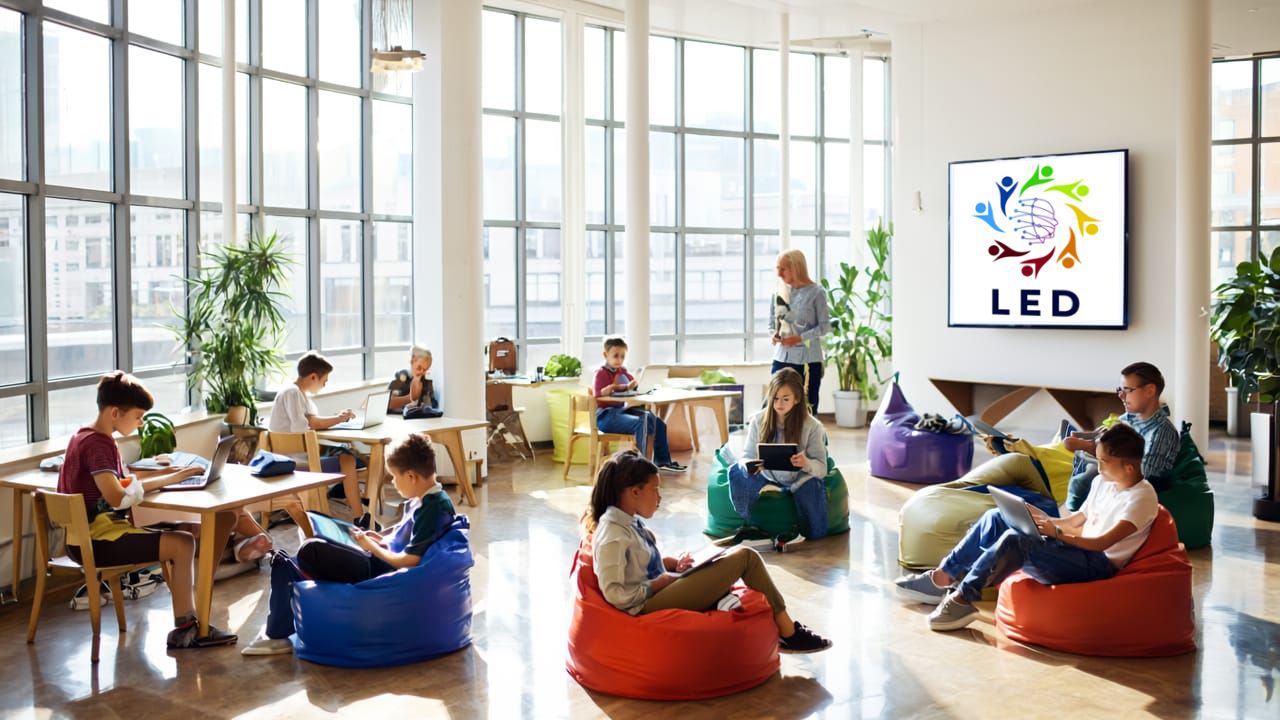
A welcoming physical environment designed with biophilic principles where digital learners can feel safe and inspired.
Digital Literacy Curricula
Developed to align with UNESCO standards and the EU Digital Education Action Plan 2021–2027.
Educational Framework
A research-based framework created specifically for supporting digital learners’ social well-being and academic success in hybrid environments.